Feast Your Eyes by Myla Goldberg
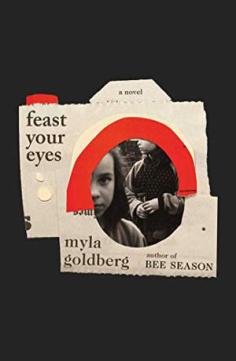 I’ve been thinking a lot about books written in unusual formats, and this is one. Of course there are letters (whole-book or series), but that’s hardly unusual, or new. This book is written as the catalogue to a photography exhibition of the work of Lillian Preston, a woman photographer in New York in the 60’s and 70’s, and through the material included with each of the 118 photos, presented in chronological order, a totally coherent–and gripping–narrative emerges. There are a number of different sources in the “catalogue.” Each picture includes some recollections and commentary by Lillian’s daughter, Samantha Preston (later known as Jane), who has assembled the exhibition after her mother’s death. And she, the daughter, is clearly the dominant voice; there are a few letters Lillian wrote to friends, but most of the remaining material comes either from Lillian’s journal, which she always wrote addressed to Samantha, or from interviews Samantha conducted herself with Lillian’s friends. All of this makes clear, through structure, that the daughter is our anchor.
The Kirkus Reviews headline for its review is “A riveting portrait of an artist who happens to be a woman.” Sure, Kirkus, if it has nothing to do with gender when the central struggle of your life is the pull of family, and especially your own child, against your art, you have to fight tokenism and pigeonholing to find a place for your work, the defining moment of your career concerns a photo reflecting an illegal abortion, and your life is upended by a court battle concerning a photo of your child in which you are blasted in the media as a “bad mother.” Sure, our culture’s consistent resistance to considering everything on its merits without gender labels is a topic in this book, and it’s an important issue to address, but this particular story is not separable from the artist’s gender. Not even a little bit.
Lilian is clearly conflicted, but she remains committed to her art first, and the book is largely about what that does to her child (and her parents). If, later in life, the child understands, is all forgiven? It has notes of a non-screwball version of Kevin Wilson’s recurrent theme about parents. And yet, after a crisis, Lillian does alter her artistic course to protect her daughter (although how voluntary that is is debatable), without great success at mending the relationship. I suppose we’re back, as always, to “You can’t have it all.”
 I’ve read a number of
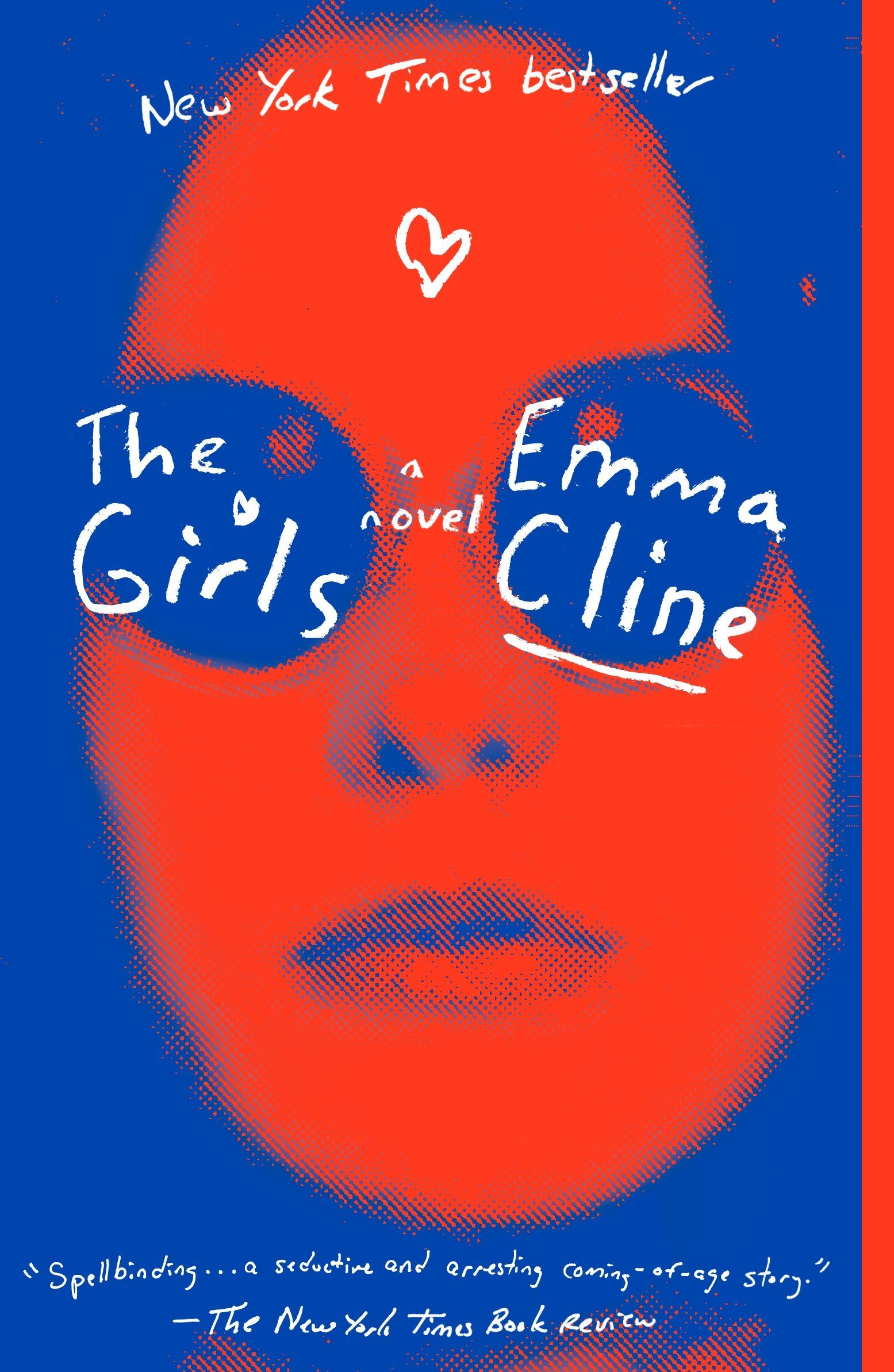 I started this because the premise sounded fun (a girl caught up in a Charles Manson-like debacle) but I ended up really enjoying other things about it. It’s full of descriptions and metaphors that are wholly original and exactly right, without ever feeling forced or overdone. It has a past-present kind of structure that is executed deftly and winds up having a purpose in the book as a whole besides just getting the story told. And as it nears the end, there’s a kind of shift in the narrator’s thinking that casts everything before in a different and intriguing light. (In this way it’s like
 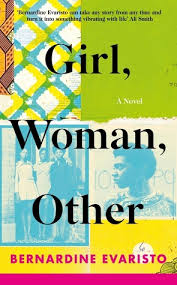 I liked the structure of fairly short but in-depth sections that follow a host of characters who are loosely connected more than I expected to. There’s no unifying plot, at least not in the traditional sense, and no one character who could fairly be called central, but the content of the various stories is all connected–they all address the struggles of being, at least in some way, a woman, and of color (specifically black), and they largely focus not just on race and gender but on sexuality and relationships. The thematic linkage, combined with the continual reappearing of characters as peripheral figures in one another’s stories, keeps it feeling cohesive, and in in the realm of the novel. Some of the dives are deeper than others, but all are engaging.
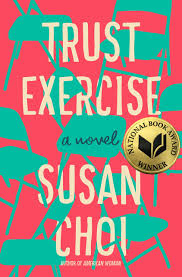 First: this is metafiction. The first section turns out to be a book a character is reading (albeit one in which she, or a version of her, is a minor character, written by a former classmate). It’s packed full of questions and suggestions about the relationship between art and life, experience and memory, truth and fiction.
 There’s definitely a lot going on here that I didn’t get on a first read, but the first read was actually satisfying just based on what was readily available–and that is a very difficult tightrope to walk. There is an obsession with language and words, with argument, in a way that perhaps I react to more than most readers because I feel many of the same things myself. But it’s also gendered, distinctly male (and self-consciously so).
 It’s quite a feat to create suspense in a novel told only in retrospective letters from one character to another about a subject whose climax we already know at the outset–but Shriver has accomplished that. She’s also captured the concept of gaslighting with piercing accuracy (it’s almost unpleasant to read because it’s so realistic) and created an epic battle between mother (Eva) and son (Kevin) that begins before he is ever born. We are always to wonder what Eva’s contribution was to all of this — and what was the contribution of her disbelieving husband? Layer in race (Armenian), gender, and class issues. It’s shocking and violent, but almost never graphic, and it escalates so slowly you can see how it would get out of hand.
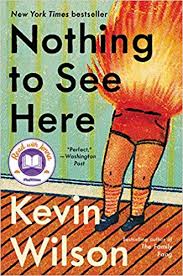 It’s hard to write books that are genuinely funny, and even harder to do that in a way that is also sad and emotionally resonant. But that is what Wilson has done. One plot turn near the end was so delightful and unexpected that I laughed/gasped out loud when I read it. (Cf.
 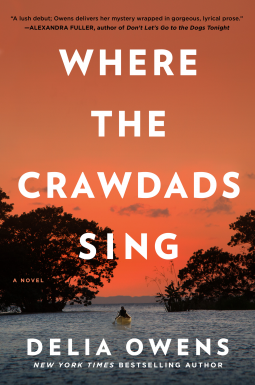 I resisted reading this for a long time because I didn’t like the title; it felt just slightly too flowery, conspicuously written, advertising a kind of self-aware beauty that tends to turn me off. And the book’s flaw, really, is just that–the title phrase is repeated in places where it seems calculated to be resonant without actually accomplishing that (including the last line).
 Amy P. Knight